
Overview
In this project we develop and operate "SeisBox," a seismic sensing unit that combines a low-cost MEMS accelerometer with a Raspberry Pi, to monitor how buildings behave during earthquakes in real time.
Our goal is to help facility managers make quick, informed decisions in the immediate aftermath of an earthquake by presenting how a building shook in an easy-to-understand form.
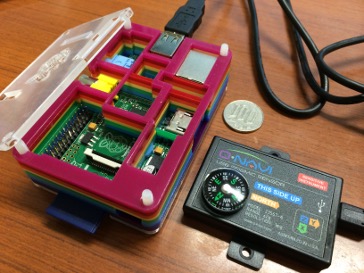
Key Functions
- ▶ Earthquake detection and intensity estimation: estimates shaking intensity in real time from low-cost sensor records
- ▶ Visualizing building response: measures shaking on multiple floors of a building and studies methods to present it in an intuitive form
- ▶ Continuous monitoring: keeps monitoring sensor health and ambient vibration during normal times
Algorithm Research
Using data from the sensor network, we are developing the following machine-learning algorithms.
- ▶ Earthquake detection (autoencoder): detects earthquakes in high-noise environments while reducing false alarms
- ▶ P/S-wave detection (R2AU-Net): phase picking with transfer learning (99.9% precision)
- ▶ Real-time intensity prediction (LSTM / GNN): real-time estimation of seismic-intensity values with LSTM, with a graph-neural-network (GNN) approach that learns relationships between stations also under development
- ▶ 3D building hazard visualization: generates three-dimensional building hazard maps using Japan's PLATEAU 3D city data
Deployment in Yokohama
In collaboration with Code for YOKOHAMA, we have installed sensors at five public facilities, six volunteer households, and one company in Yokohama, building and operating a citizen-participatory seismic sensor network (YCU community contribution program, 2021–2024).
A display terminal on the Yokohama City University campus continuously shows real-time seismic waveforms to the public. We also engage the community through idea contests for expanding the network.
Joint Research Partner
We welcome inquiries about SeisBox — hosting a sensor, deployment at your facility, or joint research.
Contact us